Espresso machine types, explained without the jargon
Walk into this category cold and you get buried in words: lever, semi-auto, heat exchanger, 58mm, pressurized basket. None of it tells you what actually lands in your cup. After years of pulling shots on these machines and pulling them apart on my bench, I can tell you the category is simpler than the marketing makes it sound (you can read how I put each one through its paces in how I test these). The "type" of machine mostly decides one thing: how much of the shot you control versus how much a computer does for you. That single choice shapes the rest, your learning curve, your budget, and whether you end up loving the process or just wanting a button. Here is how I would walk you through the real categories at the counter.
The four families, by who pulls the shot
Forget specs for a second. Every espresso machine sits somewhere on a line from "you do everything" to "the machine does everything." That is the only map you need first.
Manual and lever machines. You build pressure by hand, pulling a spring lever or pressing a piston. Total control, total responsibility, and a real skill curve. These are beautiful, often expensive, and unforgiving. Wonderful if pulling a shot by feel is the point. A bad first machine for almost everyone, because there is nothing to catch your mistakes.
Semi-automatic. This is the sweet spot, and it is what most serious home setups use. The machine handles pressure with an electric pump (the common 15-bar Italian pump), but you control the two things that actually matter: when the shot starts and when it stops. You grind, dose, tamp, lock in the portafilter, and hit a button to run water. You decide the yield by eye or by scale. The Breville Barista Express, Gaggia Classic Pro and Rancilio Silvia all live here. You learn real espresso, and you can keep getting better for years on the same machine.
Automatic. Same as semi-automatic, except the machine times the shot and shuts off at a programmed volume. It removes one variable. Handy, but a small convenience, and most home buyers do fine starting and stopping the shot themselves. This is less a distinct shopping category than a feature you will see on some semi-autos.
Super-automatic (bean-to-cup). One machine grinds, doses, tamps, brews and often froths milk, all behind a touchscreen or buttons. You add beans and water, press espresso or cappuccino, and walk away. The De'Longhi Magnifica Evo is a clean example: integrated burr grinder, six one-touch drinks, customizable strength and volume. The trade is real. You give up control and a ceiling on quality in exchange for speed and zero technique. The best shot from a super-automatic will not match a dialed-in semi-auto with a good grinder, and I would not pretend otherwise. But for many households, the right answer is still the button. I break that decision down fully in semi-automatic vs super-automatic.
Single boiler, dual boiler, heat exchanger
How a machine makes heat decides whether you can steam milk well and how long you wait. There are three setups worth knowing.
Single boiler. One heating vessel does brewing and steaming, but not at the same temperature at the same moment. You brew, then flip to steam and wait for it to ramp up hotter for milk. The Gaggia Classic Pro (single aluminum boiler) and Rancilio Silvia (single brass boiler) work this way, and so does the Breville Barista Express with its single ThermoCoil. For one or two drinks at a time, a single boiler is completely fine. The wait between brewing and steaming is just part of the rhythm. The Barista Pro's ThermoJet is a clever twist on this idea, heating in about three seconds so you barely notice the switch.
Dual boiler. Two separate boilers, one held at brew temperature and one at steam temperature, running at once. You can pull a shot and steam milk in the same breath with no waiting and rock-steady temperature. The Breville Dual Boiler is built exactly for this. It is the cafe-style experience, and it is why dual boilers sit at the prosumer end (the Dual Boiler runs around $1,600). Worth it if you make milk drinks back to back or you are chasing consistency. Overkill if you pull one shot in the morning and call it a day.
Heat exchanger. A single boiler kept at steam heat, with a pipe running fresh water through it on the way to the group so brew water lands at the right temperature. This gives you simultaneous brewing and steaming like a dual boiler, usually for less money, with a bit more fuss to manage temperature (a "cooling flush" before each shot). It is a classic prosumer middle ground. None of the six machines I keep on my bench are heat exchangers, so I will not pretend to specs I cannot verify, but you will meet the term shopping prosumer, and now you know what it does.
Pressurized vs non-pressurized baskets
This one quietly decides how good your espresso can get, and almost nobody explains it. The basket is the metal cup inside the portafilter that holds your coffee, and it comes in two flavors.
Pressurized (dual wall) baskets have a tiny restriction that forces pressure to build no matter how coarse your grind or how sloppy your tamp, so you get crema and a drinkable shot even with pre-ground supermarket coffee and zero technique. That is genuinely useful when you are starting out. Where it bites you is the ceiling: the restriction caps how good the cup can get, because the basket is doing the work that your grind and tamp should be doing. For the full mechanics of why that valve fakes the result, see what to look for in an espresso machine. The Gaggia Classic Pro ships with both pressurized and non-pressurized baskets on purpose, so you can start easy and graduate.
Non-pressurized (single wall) baskets let the coffee do everything. The water meets only your puck, so grind size, dose and tamp all show up in the cup, for better or worse. This is where real espresso lives. It also means you need a proper grinder, because a non-pressurized basket will punish coarse, inconsistent grounds with a fast, sour, watery shot. My advice for beginners: start on the pressurized basket for a week so you get drinks while you learn the motions, then switch to the non-pressurized basket and a real grinder and never look back. More on dialing that in over at espresso grind size.
54mm vs 58mm portafilters (and why the grinder matters more)
The portafilter is the handled tool you lock into the machine. Diameter gets talked about like it is a quality grade. It is not. It is mostly about ecosystem and feel.
58mm is the commercial standard. The Gaggia Classic Pro, Rancilio Silvia and Breville Dual Boiler all use a 58mm commercial portafilter, which means a huge world of aftermarket baskets, tampers and bottomless portafilters fits them. Larger pucks can also be a touch more forgiving to distribute evenly. If you like the idea of upgrading bits over time, 58mm gives you the most toys.
54mm is Breville's size on its all-in-one machines, including the Barista Express and Barista Pro. Smaller, and the accessory pool is narrower, but in daily use it pulls great espresso. Do not let 54mm scare you off a Breville; it is not a downgrade in the cup, just a different ecosystem.
Now the part the spec sheets bury. Diameter and boiler barely move the needle next to your grinder, which is the piece that decides whether the puck extracts evenly in the first place. Feed a $1,600 machine with a cheap blade grinder and a $450 Gaggia on a decent burr grinder will out-pour it, because grind consistency is what actually shapes the shot. That is why a machine without a built-in grinder (the Gaggia Classic Pro, the Rancilio Silvia, the Breville Dual Boiler) is only half a setup. A standalone burr grinder typically adds $150 to $400 on top of the sticker, so price it in from the start rather than treating it as a surprise; I lay the full math out in how much an espresso machine really costs.
| Machine | Type | Boiler | Portafilter | Grinder |
|---|---|---|---|---|
| Breville Barista Express | Semi-automatic, all-in-one | Single ThermoCoil | 54mm | Built in (16 settings) |
| Breville Barista Pro | Semi-automatic, all-in-one | ThermoJet | 54mm | Built in (30 settings) |
| Gaggia Classic Pro | Semi-automatic | Single aluminum | 58mm | None, buy separately |
| Rancilio Silvia | Semi-automatic | Single brass | 58mm | None, buy separately |
| Breville Dual Boiler | Prosumer semi-auto | Dual boiler | 58mm | None, buy separately |
| De'Longhi Magnifica Evo | Super-automatic | Bean-to-cup | Internal | Built in (13 settings) |
Which type fits which buyer
Now the useful part. Match the type to how you actually drink coffee, not to the fanciest option on the shelf.
You want great espresso and you want to learn. Go semi-automatic. An all-in-one like the Barista Express folds a decent grinder, a 15-bar pump, PID temperature control and a steam wand into one box for around $700, which makes it the cleanest on-ramp, and it anchors my picks for the best espresso machine with a built-in grinder. Rather build on bare metal and tinker forever? The Gaggia Classic Pro at around $450 is the legendary value pick and modding platform, and it tops my best budget espresso machine shortlist; the Rancilio Silvia (around $895) is the heavy, commercial-grade machine people buy specifically to learn the craft. Both the Gaggia and the Silvia need a grinder on top, so budget for one. The easiest starting points are in the best espresso machine for beginners.
You make milk drinks back to back, or you chase consistency. Step up to dual boiler so you brew and steam at once without waiting. The Breville Dual Boiler with its 58mm commercial portafilter is the cafe-style move at around $1,600. This is a deliberate upgrade, not a first machine.
Want a good drink with zero ritual? Look at a super-automatic. The De'Longhi Magnifica Evo grinds, brews and gives you six one-touch beverages around $700, and it leads my roundup of the best super-automatic espresso machines. You sacrifice the top end of quality and any hands-on control for genuine push-button ease. For a busy household that drinks lattes on the way out the door, that trade is often exactly right.
Already obsessing over extraction and palate? A manual or lever machine is your eventual destination, just not your first one. Buy it once you know your taste and your technique well enough to enjoy the demands it makes.
Before you commit to any of these, run through the buying checklist in what to look for in an espresso machine, especially the parts about steam wand quality and total budget including the grinder. And when you are ready to check current pricing, retailers like Seattle Coffee Gear and Whole Latte Love carry most of these and list real specs honestly.
Compare our tested top picks side by side, with real specs, photos and honest pros and cons.
Independent and reader-supported. Some links in our reviews are affiliate links that never change our rankings. How we test.
Frequently asked questions
What is the difference between semi-automatic and super-automatic espresso machines?
On a semi-automatic, you grind, dose, tamp and control when the shot starts and stops, so you can dial in real espresso. A super-automatic does all of that behind a button: grind, brew and often froth, in one touch. Semi-autos win on quality and control, super-autos win on speed and zero technique. Most enthusiasts go semi-automatic.
Do I need a dual boiler espresso machine?
Only if you make milk drinks back to back or want cafe-level consistency. A dual boiler brews and steams at the same temperature simultaneously, so there is no waiting. For one or two drinks a morning, a single boiler like the Gaggia Classic Pro or Breville Barista Express is plenty, and far cheaper than a $1,600 dual boiler setup.
Are pressurized baskets bad?
No, they are training wheels. A pressurized basket forces pressure to build even with a coarse grind or weak tamp, so beginners get crema and a drinkable shot fast. The downside is it caps quality and hides what your coffee is doing. Start on pressurized while you learn, then move to a non-pressurized basket and a real grinder to taste the difference.
Does portafilter size (54mm vs 58mm) affect espresso quality?
Not meaningfully in the cup. 58mm is the commercial standard with the biggest accessory selection, used by the Gaggia, Rancilio Silvia and Breville Dual Boiler. Breville's all-in-ones use 54mm and still pull excellent shots. Pick based on the machine you want, not the diameter. Your grinder affects quality far more than portafilter size ever will.
Which type of espresso machine is best for a complete beginner?
An all-in-one semi-automatic like the Breville Barista Express, around $700, because it bundles a grinder, PID control and a steam wand so you learn the whole process in one box. If you want to spend less and tinker, the Gaggia Classic Pro at around $450 is a great value, but budget for a separate quality grinder on top of it.
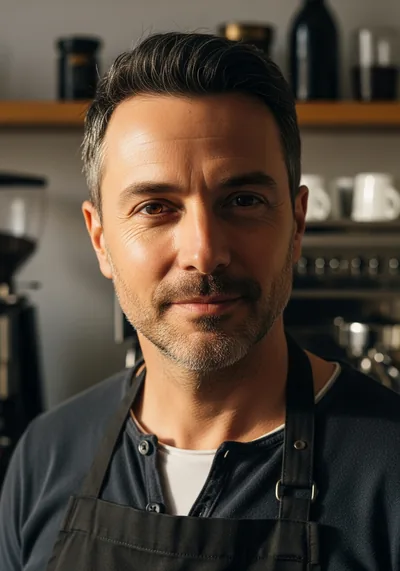
I pulled shots behind a bar for years and now obsess over home espresso. I own and tear down these machines and write every review and guide here. I rank by what makes good coffee, not by who pays the most. How we test →