Best espresso machine for beginners
The biggest mistake beginners make is not picking the wrong machine. It is buying a machine plus a cheap grinder, or no grinder at all, then blaming the machine when the shots come out sour and thin. After years of owning, dialing in and tearing down most of the machines new people ask me about (and you can see how I test these if you want the method), the pattern is always the same. For a first espresso machine, the path of least pain is an all-in-one with a built-in grinder, because it removes the single most expensive and confusing decision from your plate. My top pick is the Breville Barista Express for exactly that reason. Below I rank three machines I would actually recommend to a friend, explain what a pressurized basket does for you early on, and tell you who should buy each one.
My top beginner pick: Breville Barista Express
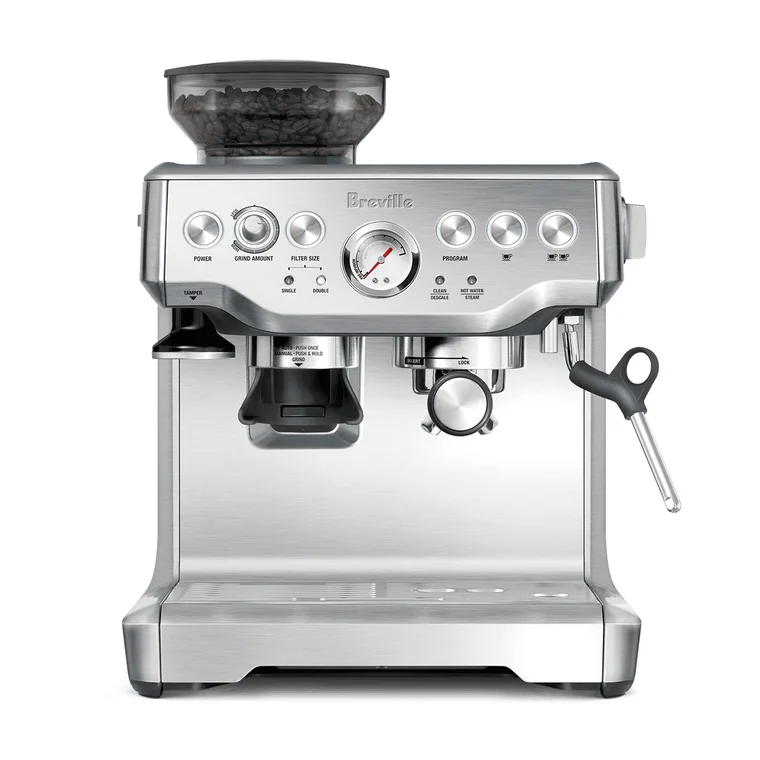
Want the shortest distance between opening a box and drinking a decent cappuccino? The Breville Barista Express (BES870) is it. At around $700 it bundles a conical burr grinder (16 grind settings) right into the chassis, so you grind, dose, tamp and brew without ever owning a second appliance. That convenience is also why it pencils out: a standalone grinder good enough for real espresso runs $150 to $400, so the bundle is cheaper than buying the two pieces separately, and the right grind is what decides whether your shot tastes balanced or harsh in the first place.
The machine runs a 54mm portafilter, a single ThermoCoil heating system, a 15-bar Italian pump and PID temperature control, with a 67 oz water tank and a manual steam wand that has a little pressure gauge to help you find your zone. The gauge earns its keep in week one: it gives you a visual target so you are not flying blind on grind size. Dial the grind until the needle settles in the espresso range, and you have a starting point instead of guesswork.
It is not magic. You still steam milk by hand, which takes practice, and the single boiler means you brew, then switch to steam, with a short wait between. But for learning the craft without three appliances crowding your counter, nothing makes it easier. I cover the full ownership picture in our Breville Barista Express review, and if speed matters to you, the Barista Express vs Barista Pro comparison explains what the extra $200 buys.
Why an all-in-one helps beginners (and what a pressurized basket really does)
The grinder is not the place to save money. Pre-ground coffee is too coarse and too stale to ever pull a balanced shot, and a cheap blade grinder produces uneven particles that channel and taste harsh, so on any machine without a built-in grinder (the Gaggia, the Rancilio, the Breville Dual Boiler) a quality burr grinder is a line item you pay for on day one, not later. A $450 Gaggia is really closer to $650 once you add a decent one, and our guide to what an espresso machine really costs lays out that math machine by machine. The appeal of an all-in-one for a first setup is that the grinder is already matched to the brew head and tuned for fine espresso grinds, which is the deeper point I make in our breakdown of espresso grind size.
A pressurized basket is the other thing worth knowing before your first pull: it forces the puck to build pressure no matter how rough your grind or tamp is, which gets you a passable, crema-topped shot while your technique is still sloppy. Treat it as a temporary aid and switch to the standard basket once your grinding is consistent. The Gaggia Classic Pro ships with both baskets, which is why it makes such a forgiving teacher.
If you want to understand the categories before you spend, our guide to espresso machine types lays out semi-automatic versus super-automatic in plain English, and what to look for in an espresso machine walks through boilers, portafilter size and the features worth paying for.
Best value to learn on: Gaggia Classic Pro
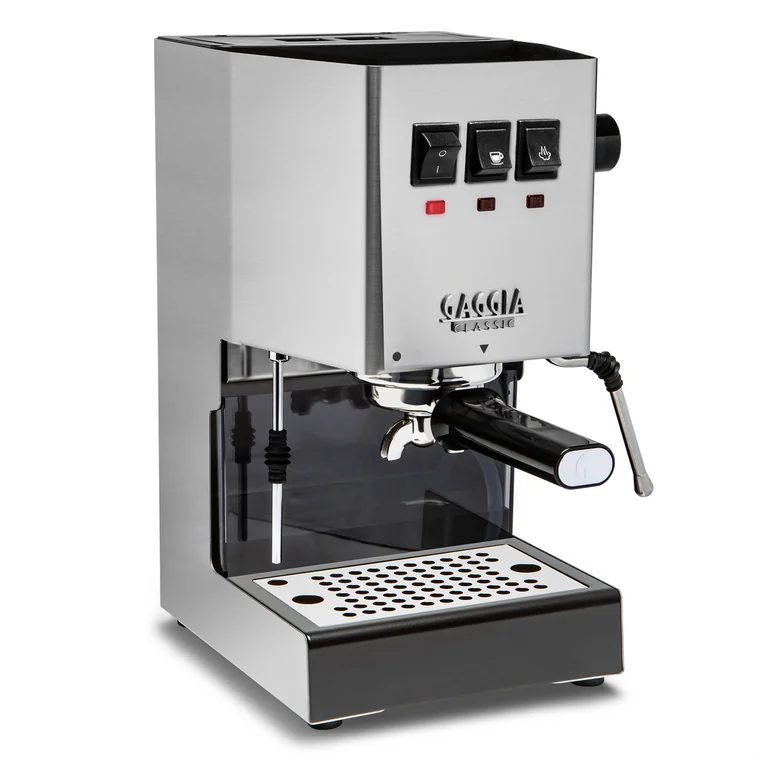
Not sure you want to commit $700 to a hobby you have not tried yet? The Gaggia Classic Pro (RI9380) is the smart entry at around $450. It is a semi-automatic with a single aluminum boiler, a real 58mm commercial portafilter, a 15-bar pump and a compact 16 lbs footprint. It ships with both pressurized and non-pressurized baskets, so you can lean on the pressurized one while you learn, then switch to the standard basket to chase real extraction.
The catch is no grinder and no PID from the factory, which means budgeting for a separate burr grinder up front and a realistic starting cost nearer $650 once you add one. What you get for that is the most beloved modding and learning platform in home espresso. The 58mm portafilter is the same size found on commercial machines, the build is simple and serviceable, and there is a deep community for upgrades like a PID kit down the road. You steam milk and pull shots manually, which means a steeper first week than a Breville, but you also learn faster because nothing is hidden from you.
The full breakdown is in our Gaggia Classic Pro review. Torn between the two classic learner machines? Our Gaggia Classic vs Rancilio Silvia piece sorts out which suits your temperament and budget.
Best if you never want to learn: De'Longhi Magnifica Evo
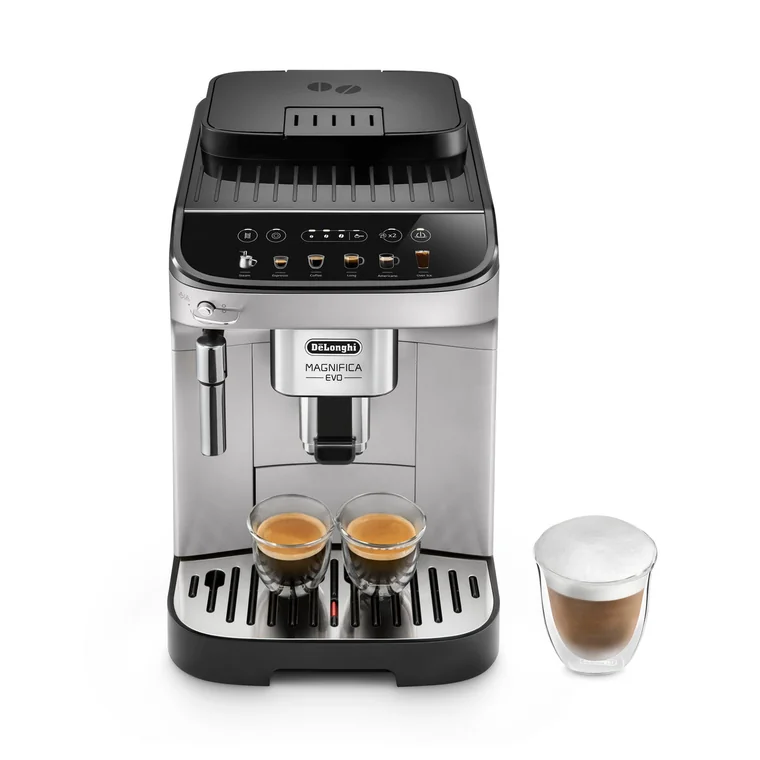
Some people do not want a hobby. They want a button that produces a latte before work. If that describes your mornings, a super-automatic will serve you far better than a manual machine you end up resenting. The De'Longhi Magnifica Evo (ECAM29043SB) is around $700 and does it all in one box: an integrated conical burr grinder (13 settings) feeds a bean-to-cup brew system with six one-touch drinks (espresso, coffee, latte, latte macchiato, cappuccino and hot water), plus customizable strength and volume. Note that this particular model uses a manual milk frother rather than an automatic carafe, so you still steam by hand for milk drinks.
What you give up is control over the shot itself, and our semi-automatic vs super-automatic comparison spells out that tradeoff in full. A great shot pulled by hand on a Gaggia will out-taste the Evo, because a portafilter machine lets you fine-tune extraction in a way a sealed brew unit never will. For daily, fuss-free, push-and-walk-away coffee, though, nothing on this list is easier. There is no tamping, no dosing, no learning curve. If reliable cappuccinos matter to you more than the craft, the Evo is the pick. Our De'Longhi Magnifica Evo review goes deeper on day-to-day living with it.
How the three compare
Here is the quick side by side. Prices are approximate, and the grinder column is the one beginners overlook most.
| Machine | Price | Type | Built-in grinder | Portafilter | Best for |
|---|---|---|---|---|---|
| Breville Barista Express | ~$700 | Semi-automatic, all-in-one | Yes, 16 settings | 54mm | Easiest path to good espresso |
| Gaggia Classic Pro | ~$450 | Semi-automatic | No (add a grinder) | 58mm | Best value to learn and mod |
| De'Longhi Magnifica Evo | ~$700 | Super-automatic | Yes, 13 settings | None (bean-to-cup) | Push-button, no learning |
Hand one machine to a friend starting out and it should be the Barista Express, because the included grinder removes the decision people get most wrong. Watching every dollar and happy to tinker? The Gaggia is the better buy once you accept the added grinder cost. And if the craft genuinely holds no appeal for you, the Evo spares you a manual machine you will not enjoy. You can check current pricing on all three at Whole Latte Love, and once your machine arrives, our how to use an espresso machine guide gets you to a drinkable shot on day one.
Compare our tested top picks side by side, with real specs, photos and honest pros and cons.
Independent and reader-supported. Some links in our reviews are affiliate links that never change our rankings. How we test.
Frequently asked questions
Do I really need a separate grinder?
For any machine without a built-in grinder, yes, and there is no way around it. Espresso depends on a fine, even, fresh grind that pre-ground coffee and blade grinders simply cannot deliver, which is why we treat it as its own buying decision in our guide to espresso grind size. A quality burr grinder runs $150 to $400, so an all-in-one like the Breville Barista Express ends up simpler and cheaper than buying a machine and grinder separately, since the grinder is already matched to the brew head.
What is a pressurized basket and should I use one?
A pressurized basket forces the coffee puck to build pressure regardless of your technique, so it produces a passable, crema-topped shot even when your grind or tamp is off, which makes it a handy crutch in your first weeks. Start with it, then switch to a standard basket once your grinding is consistent. We explain the full difference between the two in what to look for in an espresso machine.
Is the Breville Barista Express worth it over the cheaper Gaggia?
It comes down to whether you want a grinder included. The Gaggia Classic Pro is about $450 but has no grinder, so once you add a good one the real cost climbs toward $650, which our breakdown of what an espresso machine really costs covers in detail. The Barista Express bundles a grinder for around $700. Value simplicity and one box on the counter, and the Breville wins. Prefer to tinker and mod, and the Gaggia does.
Should a beginner buy a super-automatic instead?
Only if you want coffee, not a hobby. A super-automatic like the De'Longhi Magnifica Evo gives you one-touch drinks with no tamping or dialing in, which is genuinely the easiest option, though a well-pulled shot from a semi-automatic will taste better. Our semi-automatic vs super-automatic guide weighs the two so you can decide which actually fits your mornings before you spend.
How long does it take to pull a good shot as a beginner?
With an all-in-one and the included pressurized basket, you can make a drinkable shot on day one. Getting consistent, balanced shots on a standard basket usually takes a few weeks of dialing in grind size, dose and tamp. Steaming milk well takes its own practice. The machine matters less here than fresh beans, a good grinder and a little patience.
I pulled shots behind a bar for years and now obsess over home espresso. I own and tear down these machines and write every review and guide here. I rank by what makes good coffee, not by who pays the most. How we test →