The best budget espresso machine for real shots, not just a low price
Ask me for the best budget espresso machine and you will not get a finger pointed at the cheapest box on the shelf. I learned this trade behind a cafe counter and have spent the years since dialing in machines on my own kitchen counter, which is how I test the picks here, and what that experience teaches fast is that a low sticker price means nothing if the machine fights you. The bigger catch sits one line below the machine on your receipt: the grinder. On the budget end, that is where buyers get burned, and a cheap grinder is the single most common way people waste money chasing affordable espresso. This page ranks the machines I would actually buy under or around $500 for the brewer itself, and it says plainly where the rest of your money has to go. For more on how I run these machines through their paces, see how I test every machine.
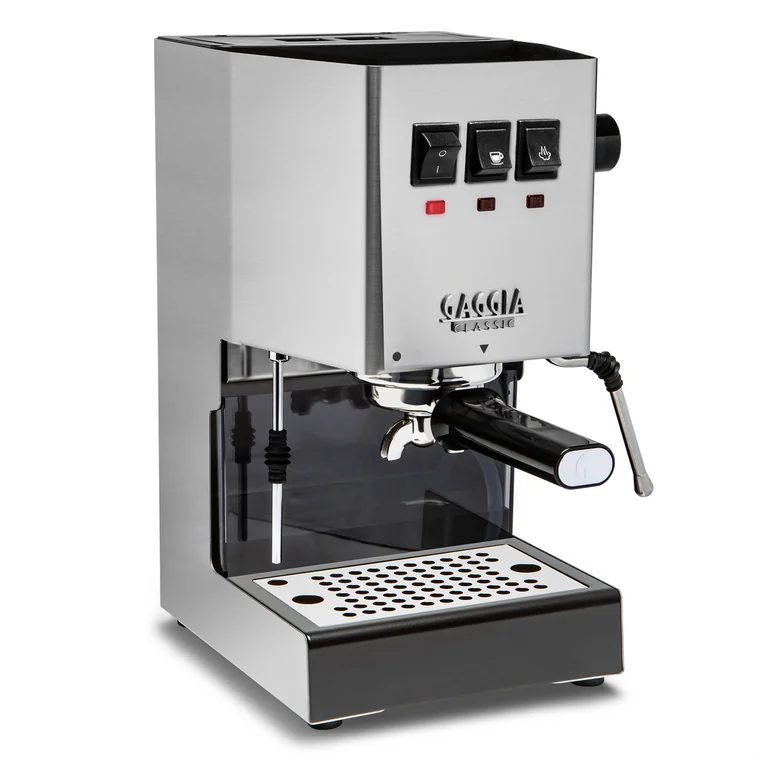
My top budget pick: the Gaggia Classic Pro
Got a tight budget and a real urge to learn espresso? The Gaggia Classic Pro (around $450) is the one I hand people. It is a real semi-automatic with a 58mm commercial portafilter, a 15-bar pump, and a single aluminum boiler in a metal body that weighs about 16 lbs. That 58mm basket matters more than it sounds. It is the same size pro machines use, so the puck behaves the way every tutorial and every barista describes, and your accessories carry over if you upgrade later.
What I love about it is honesty of feel. There is no screen, no auto-everything, just a couple of switches and you. It ships with both pressurized and non-pressurized baskets, and on this machine the move is simple: start on the pressurized one while your grind is still rough, then graduate to the non-pressurized basket once you are dialing in fine and tamping right. If you want the full theory on why those two baskets behave so differently, I cover it in what to look for in an espresso machine.
It is also the most famous modding platform in home espresso for a reason. A PID controller for tighter temperature, a better steam wand, an upgraded portafilter, people add these over years. You do not need a single mod to make great coffee, but it is reassuring to own a machine that grows with you instead of capping you. The catch is steam. The single boiler means you brew, then wait for it to heat to steam, then steam. For one or two drinks a morning that rhythm is fine. For a household banging out four lattes back to back it gets tedious. Read my full Gaggia Classic Pro review for how it actually pulls and steams day to day.
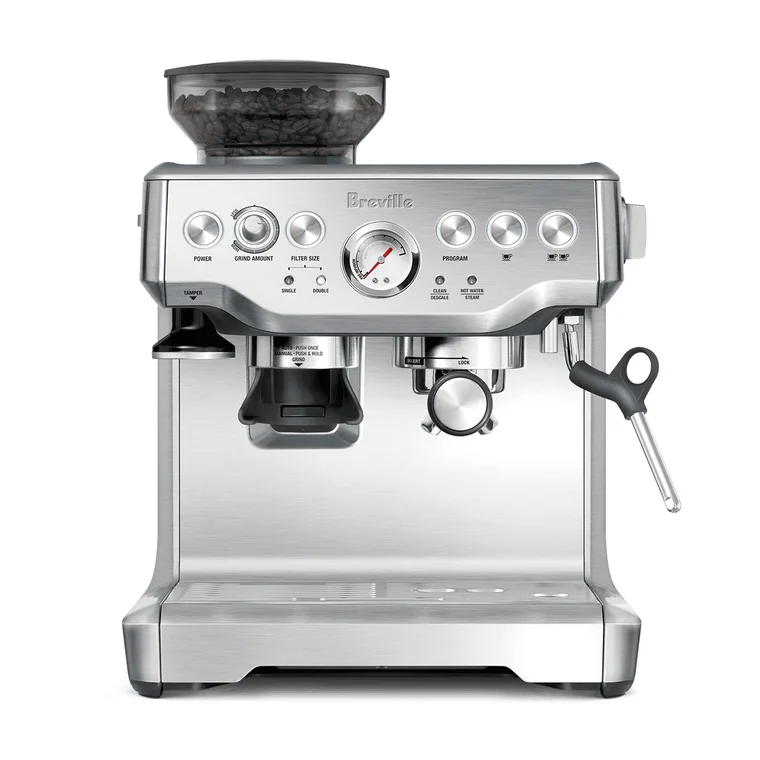
The step up that includes a grinder: Breville Barista Express
The Gaggia has one asterisk: no grinder. The Breville Barista Express (around $700) answers that by putting a conical burr grinder right in the machine. It is an all-in-one semi-automatic with 16 grind settings, a 54mm portafilter, a single ThermoCoil heating system with PID temperature control, a 15-bar Italian pump, a 67 oz tank, and a manual steam wand with a pressure gauge. At about 23 lbs it is a substantial countertop unit.
Yes, that is more than $500, which is why it sits as the step up rather than the budget winner. Here is the math people miss, though. Once you add a decent grinder to the Gaggia, the gap closes fast, and the Barista Express buys you a tidy single footprint, grind to portafilter dosing, and the PID dialed in for you out of the box. The grinder is built down to a price so it is not a $300 standalone, but it grinds fine enough for real espresso, which is the bar that matters. As a first machine that does everything in one box, it is the classic recommendation, and I walk through exactly how it grinds, brews, and steams in the Breville Barista Express review.
One note on portafilter size: the Breville uses 54mm and the Gaggia uses 58mm. Neither is better at making coffee, but if you ever plan to chase the wider 58mm prosumer ecosystem, the Gaggia path keeps you there. This machine ships with both pressurized and non-pressurized baskets too, so a beginner can start forgiving and tighten up later.
Budget espresso machine comparison
| Machine | Price | Grinder | Portafilter | Boiler / heating | Best for |
|---|---|---|---|---|---|
| Gaggia Classic Pro | About $450 | None (buy separately) | 58mm commercial | Single aluminum boiler, 15-bar pump | Tight budget, learning the craft, modding |
| Breville Barista Express | About $700 | Built-in, 16 settings | 54mm | Single ThermoCoil, PID | One-box convenience with a grinder included |
The Gaggia wins on machine price and on the 58mm upgrade path. The Breville wins on owning a grinder from day one and on a cleaner countertop. Both make genuinely good espresso in the right hands. Remember that the Gaggia's $450 sticker is not the whole story once you add a grinder, which I break down in how much an espresso machine really costs.
Factor a grinder into your budget
Here is the line item I will not let you skip. Espresso is brutally sensitive to grind, far more than drip or French press. The grind has to be fine and uniform, and you adjust it in tiny steps to control how fast the shot runs, which is exactly why a cheap budget grinder ruins more first-timer setups than any machine ever does. A blade grinder or a basic burr grinder built for drip cannot get there, and no machine on earth rescues a bad grind. The full why-it-decides-the-shot argument lives in espresso grind size, so dialing in does not feel like guesswork.
When you price the Gaggia Classic Pro, then, do not stop at $450. You need a real espresso-capable grinder alongside it, and a respectable entry grinder runs a few hundred dollars, which pushes the realistic all-in cost of the Gaggia setup close to the Breville once everything is in the cart. That is not a knock on the Gaggia. It is the reason the Barista Express exists and why I list it right behind. Decide up front whether you want machine plus separate grinder, which is more flexible with a higher long-term ceiling but more counter space, or one box that handles both, which is simpler and faster to start. I lay out every line item, machine, grinder, beans, and the small gear, in how much an espresso machine really costs.
What not to cut on a budget
Saving money is the whole point here, but a few things are false economy. Cut these and you will spend more in wasted beans and frustration than you saved.
- The grinder. If something has to give, give on the machine before the grinder. A modest machine with a good grinder beats a fancy machine with a bad one, every time.
- Fresh beans. Stale supermarket espresso will taste flat no matter what you spend. Buy beans with a roast date and use them within a few weeks.
- A real scale and basic technique. Weighing your dose and your shot is nearly free and is the single biggest jump in consistency. Pair it with how to use an espresso machine and you are most of the way there.
- Maintenance. Descaling and backflushing are cheap and keep a budget machine alive for years. Skip them and you shorten its life. See descaling and maintenance.
Where you can safely save: skip the touchscreen, skip dual boilers, skip the auto-frother. Manual steaming on a single boiler is a skill, not a flaw, and learning it on a cheaper machine is part of the fun.
Who should look at other categories
Budget semi-automatics reward people who enjoy the process. Want no process at all? A super-automatic like the De'Longhi Magnifica Evo (around $700) grinds, brews, and dispenses six one-touch drinks with a built-in conical burr grinder, and that built-in grinder is precisely what removes the separate-grinder problem you have to solve with the Gaggia. The push-button ease costs you some espresso quality and hands-on control, a fair trade for plenty of homes, and I weigh the full case in semi-automatic versus super-automatic. When pure speed and zero learning curve is the goal, browse the best super-automatic espresso machines instead.
Brand new and nervous about the whole thing? The pressurized-basket forgiveness of the Gaggia, or the all-in-one Breville, both live happily in the best espresso machines for beginners. And if you specifically want the grinder bundled in without thinking about it, browse the best espresso machines with a grinder.
Ready to check current pricing on the budget picks? I keep an eye on a retailer I trust over at Whole Latte Love, since espresso prices and bundles move around. My rankings do not bend for affiliate links; the Gaggia leads this list because it earns it.
Compare our tested top picks side by side, with real specs, photos and honest pros and cons.
Independent and reader-supported. Some links in our reviews are affiliate links that never change our rankings. How we test.
Frequently asked questions
What is the best budget espresso machine?
For real, hands-on espresso under $500 for the machine, the Gaggia Classic Pro (around $450) is my pick. It has a 58mm commercial portafilter, a 15-bar pump, and ships with pressurized and non-pressurized baskets, so it forgives beginners and grows with you. You still need a separate grinder, which belongs in your budget from the start.
Why does the Breville Barista Express cost more if it is on a budget list?
It is the step up, not the budget winner, because at around $700 it bundles a built-in conical burr grinder into one box. Once you add a quality standalone grinder to the cheaper Gaggia, the total cost lands close to the Breville anyway. The Barista Express simply pays that grinder cost up front and saves you counter space.
Do I really need a separate grinder for the Gaggia Classic Pro?
Yes, and do not skip it. The Gaggia has no grinder, and a blade grinder or a basic drip burr grinder cannot grind fine and uniform enough for espresso. Budget a few hundred dollars for a real espresso-capable grinder alongside the machine. If you want the reasoning on why grind decides the shot, see my guide to espresso grind size.
What should I not cut corners on with a cheap espresso setup?
Protect four things: the grinder, fresh beans with a roast date, a basic scale plus good technique, and routine maintenance like descaling and backflushing. You can safely skip touchscreens, dual boilers, and auto-frothers. Manual steaming on a single boiler is a skill worth learning, and it keeps your cost down without hurting the cup.
Is a super-automatic a better budget choice?
It depends on what you want. A super-automatic like the De'Longhi Magnifica Evo (around $700) is push-button convenient with a built-in grinder and one-touch drinks, but it gives up some espresso quality and control for that ease. Enjoy dialing in shots? A budget semi-automatic gives better coffee for the money. Just want a fast, easy cup? The super-automatic wins. I compare the two approaches in detail on my semi-automatic versus super-automatic page.
I pulled shots behind a bar for years and now obsess over home espresso. I own and tear down these machines and write every review and guide here. I rank by what makes good coffee, not by who pays the most. How we test →