Best prosumer espresso machine: cafe-grade control at home
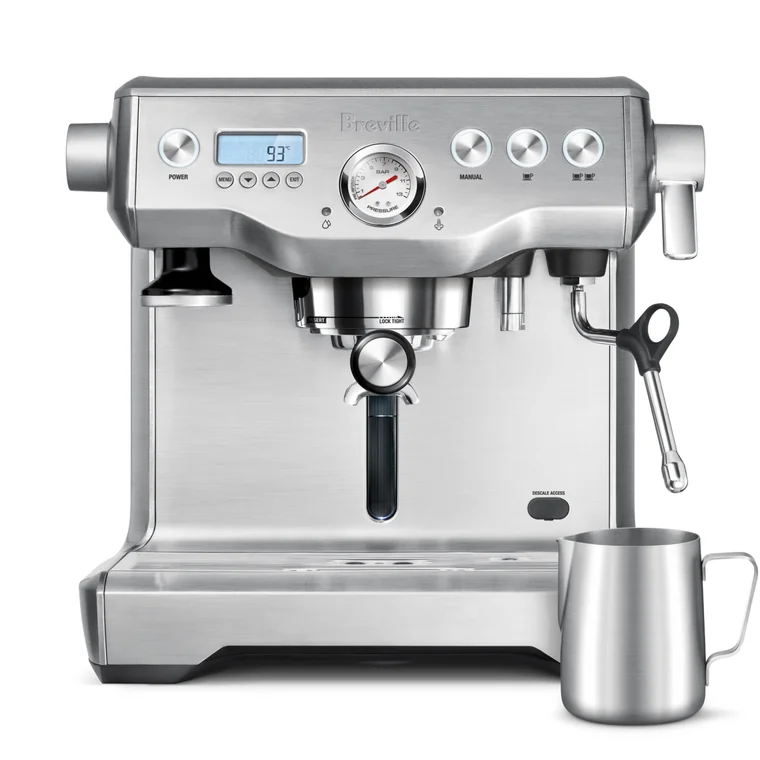
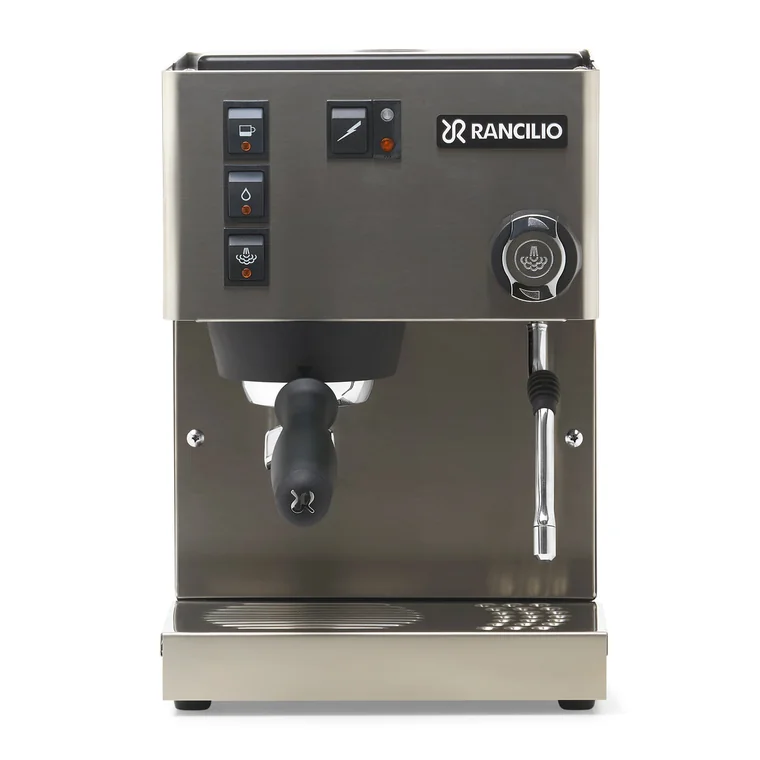
Prosumer is a fuzzy word, so let me ground it. A prosumer espresso machine is the gear that sits between a good consumer all-in-one and a commercial setup: heavier build, a 58mm commercial portafilter, real temperature stability, and steam power you can actually texture milk with. You give up the convenience of push-button machines and you usually give up a built-in grinder. In return you get control over almost every variable that decides whether your shot tastes like syrup or like dishwater.
The first time I dialed in a Rancilio Silvia, I spent a whole bag of beans chasing a single sour shot before I figured out the boiler had drifted hot between pours. That hour taught me more about espresso than a month on a push-button machine, and it is the reason I trust this tier of gear. (If you want the full bench process behind these calls, here is how I test these machines.) Two earn the picks here for very different buyers: the Breville Dual Boiler around $1,600 for someone who wants to brew and steam at the same time with PID precision, and the Rancilio Silvia around $895 for someone who wants to learn the craft on a tank that will outlive their car. Below is what this tier actually buys you, who should skip it, and why your grinder budget matters more than which of these two you pick.
What prosumer actually buys you
Step up from a consumer all-in-one and you are not paying for a faster shot button. You are paying for stability and headroom. Here is where the money goes, and why it shows up in the cup.
- Temperature stability. Espresso is brutally sensitive to brew temperature. A couple of degrees off and a bright Ethiopian goes sour or a dark roast turns ashy. PID control on the Breville Dual Boiler holds your target temperature shot to shot. The Rancilio Silvia ships without PID, which is exactly why a PID add-on is one of the most common Silvia mods. Out of the box you manage the Silvia with timing and surfing, which is a skill, not a flaw.
- Steam power. This is the upgrade most people underestimate. A real steam boiler gives you dry, high-pressure steam that builds glossy microfoam fast, so you can pour latte art instead of fighting big bubbles. Both of these steam far better than a typical all-in-one.
- The 58mm commercial portafilter. Both machines use the same 58mm size you find on cafe equipment. A bigger basket spreads the puck wider and shallower, which is more forgiving of an uneven tamp, and it opens you up to a huge world of aftermarket baskets, distribution tools, and bottomless portafilters.
- Build that does not flinch. The Silvia weighs about 30 lbs with a brass boiler and a frame that shrugs off years of daily use. The Dual Boiler is a serious stainless machine. This is gear you keep, service, and pass down, not replace in three years.
For a full breakdown of these tradeoffs across price tiers, see what to look for in an espresso machine.
The two prosumer picks compared
These two split cleanly. One is about doing more at once with less fuss, the other is about learning to control every variable yourself. Here is how the verified specs line up.
| Machine | Breville Dual Boiler (BES920) | Rancilio Silvia |
|---|---|---|
| Price | Around $1,600 | Around $895 |
| Boiler setup | Dual stainless boilers (brew and steam at once) | Single brass boiler |
| Portafilter | 58mm commercial | 58mm commercial |
| PID temperature control | Yes, built in | No from the factory (popular mod) |
| Built-in grinder | No | No |
| Build weight | Stainless prosumer build | About 30 lbs, commercial-grade |
| Best for | Milk drinkers who want speed and precision out of the box | Learners who want to master the craft |
Read each one in depth in the Breville Dual Boiler review and the Rancilio Silvia review. Neither includes a grinder, which we get to below.
Pick 1: Breville Dual Boiler, the do-everything precision machine
The Dual Boiler is my default recommendation for anyone who drinks milk-based espresso daily and wants cafe results without learning to babysit a single boiler. Two separate stainless boilers mean you pull your shot and steam your milk at the same time, at independent temperatures. No waiting, no temperature surfing. If you make two cappuccinos back to back every morning, that workflow alone justifies the step up.
PID control is built in, so dialing in a new coffee is a matter of setting a number and adjusting your grind, not guessing. The 58mm commercial portafilter and the deep pre-infusion control let you treat this like a small cafe machine. Pulls are stable, repeatable, and forgiving once your grinder and dose are sorted.
Price and footprint are the catch. At around $1,600 it costs as much as some of these machines plus a serious grinder combined, and it is overkill if you mostly drink straight espresso or only pull a couple of shots a week. Add a capable espresso grinder and the realistic total for the Dual Boiler lands closer to $2,200; the rest of that math sits in our full espresso machine cost breakdown. If you want this kind of control with milk-drink convenience, it earns it. You can check current pricing before you commit.
Pick 2: Rancilio Silvia, the machine you learn the craft on
The Silvia is the machine I send people to when they say they actually want to get good at espresso, not just get a coffee out of a box. It is a single brass boiler in a roughly 30 lb commercial-grade frame, with the same 58mm portafilter the pros use. No PID from the factory, no automation, no shortcuts. That sounds like a downside until you realize it is the point.
On a Silvia you feel everything. You start timing your shot to the boiler cycle, a trick called temperature surfing, and within a week your hands know how to read the steam wand and texture milk without thinking about it. Grind size and dose move the cup more than anything the machine does, and the Silvia makes you confront that fast. After a few weeks of it, you understand espresso in a way no super-automatic will ever teach you. And when you want more consistency, the aftermarket is enormous: a PID kit is the classic first mod and turns the Silvia into a genuinely modern machine.
Who should skip it: anyone who wants their espresso to be easy on day one, or who needs to steam and brew at the same time for a household of milk drinkers. The Silvia rewards patience. If that is not you, the Dual Boiler or a good all-in-one will make you happier. For learners on a tighter budget, the Gaggia Classic Pro covers similar ground for less, and the Gaggia Classic vs Rancilio Silvia comparison lays out that choice. You can see the Silvia and its accessories here.
The grinder is not optional, and it is a real line item
Skipping the grinder is the single biggest mistake at this price. Neither of these machines comes with one, and a prosumer machine fed by pre-ground coffee or a cheap blade grinder will pull worse shots than a $700 all-in-one with a decent integrated burr grinder. I have proven this on my own counter more times than I want to admit.
The reason is simple: espresso depends on grind consistency and your ability to make tiny adjustments. A flat or conical burr grinder built for espresso lets you dial in to the exact point where your shot runs in the right time. A blade grinder produces dust and boulders that channel and choke. So when you price one of these machines, count a real espresso grinder in the same breath. On the Silvia, a grinder that does the machine justice runs $300 to $500, which pushes your $895 starting point to roughly $1,200 to $1,400 all in. For the deeper sticker-versus-setup math, see how much an espresso machine really costs.
If you want to understand exactly how grind controls your shot, read espresso grind size. Get the grind right first, and the machine becomes the stage your beans perform on.
Who should buy prosumer, and who is wasting money
If you pull shots most days and already own a grinder you trust, the control on this tier earns its keep every morning: the 58mm format, the real steam power, and the temperature stability genuinely change what you can make. If you are mostly talking yourself into it, drinking a cup or two a week and hoping the machine will do the work, buy the Breville Barista Express instead and put the difference toward better beans.
What about the people in between? If the idea of dialing in a grinder sounds like a chore rather than a hobby, a super-automatic bean-to-cup is built precisely to take that decision out of your hands, and a quality all-in-one with a built-in grinder gets you most of the way for a fraction of the total cost. Still new to all of this? Start at best espresso machine for beginners and grow into prosumer later, once you actually feel the limits of your first machine.
Compare our tested top picks side by side, with real specs, photos and honest pros and cons.
Independent and reader-supported. Some links in our reviews are affiliate links that never change our rankings. How we test.
Frequently asked questions
What makes a machine prosumer rather than consumer?
It is the build and the control, not a marketing label. Prosumer machines like the Breville Dual Boiler and Rancilio Silvia use a 58mm commercial portafilter, heavier commercial-grade construction, and serious steam power. They give you cafe-level temperature stability and milk texturing, usually without a built-in grinder, so you control nearly every variable that shapes the shot yourself.
Do I really need a separate grinder for these?
Yes, and it is mandatory. Neither the Dual Boiler nor the Silvia includes a grinder, and a great machine fed by a bad grinder pulls poor shots. A quality espresso burr grinder is the part that lets you dial in grind size precisely, so count one into the total: figure $300 to $500 on top of either machine. The full cost picture is in our espresso machine cost breakdown.
Breville Dual Boiler or Rancilio Silvia, which should I get?
Pick the Dual Boiler if you drink milk-based espresso daily and want to brew and steam at once with built-in PID precision out of the box. Pick the Silvia if you want to learn the craft on a roughly 30 lb commercial-grade machine and do not mind managing temperature yourself, with a PID mod available later when you want it.
Is a prosumer machine overkill for me?
It can be. If you mostly drink one or two cups a week, want push-button ease, or would rather not own and dial in a grinder, prosumer gear is more machine than you need. A super-automatic or a good all-in-one with an integrated grinder will make you happier. Prosumer pays off when you pull shots most days and want full control.
Does the Rancilio Silvia not having PID matter?
It matters, but it is workable. Without factory PID you manage brew temperature by timing your shot after the boiler cycles, a technique called temperature surfing. It is a real skill that teaches you a lot. If you want consistency without the learning curve, a PID kit is the most popular Silvia mod and modernizes the machine.
I pulled shots behind a bar for years and now obsess over home espresso. I own and tear down these machines and write every review and guide here. I rank by what makes good coffee, not by who pays the most. How we test →